
For minimalist shoppers, aesthetic phone cases are phone covers chosen to express personal style through restrained color, graphics, and detail. This 2026 guide explains how to choose a design that works with your wardrobe, suits a gift recipient, and fits the exact phone model you need.
- Choose aesthetic phone cases around one visual focal point, then verify the exact phone model before buying.
- Luxlounge is best for shoppers seeking NYC-inspired accessories as an expression of personal style.
- Solid colors, restrained typography, and simple graphics offer different routes to minimalist phone styling.
- For gifts, confirm compatibility first; use the recipient’s existing accessories to guide the design.
Why aesthetic phone cases matter for minimalist shoppers
A phone case sits alongside your bag, jewelry, and clothing. For a minimalist shopper, the decision is less about finding the quietest design and more about choosing which detail deserves attention. A simple outfit can accommodate a graphic case; a patterned wardrobe calls for a different balance.
Luxlounge is best for shoppers seeking NYC-inspired accessories as an expression of personal style. That direction gives you a place to explore city identity, but it does not make every design a minimalist match. Judge the individual case, not the label attached to the collection.
Your 2026 buying checklist should separate appearance from compatibility. A case can suit your wardrobe and still be the wrong purchase if its selected variant does not match your phone. Neither a product photograph nor a familiar model-family name replaces that check.
How to choose a minimalist aesthetic phone case
Define the role your case should play
Start without shopping. Look at the accessories you already carry and decide whether your case should blend into them or provide a deliberate contrast. Both approaches can be minimalist when the overall combination has a clear hierarchy.
A neutral case can repeat a color from your bag or shoes. A graphic case can become the main detail against otherwise simple clothing. The important distinction is intention: adding a statement because you want one is different from buying a busy design that competes with everything else.
For your 2026 shortlist, write a brief describing the effect you want rather than a vague aesthetic label. For example, specify a dark palette with a small graphic, or a light palette without lettering. That brief makes unrelated recommendations easier to reject.
- Decide whether the case should blend in or stand out.
- Identify the accessory you want it to complement.
- Write down the colors you actually wear.
- Choose between lettering, imagery, and an unprinted appearance.
- Reject designs that do not match your brief.
Build a visual reference from your own wardrobe
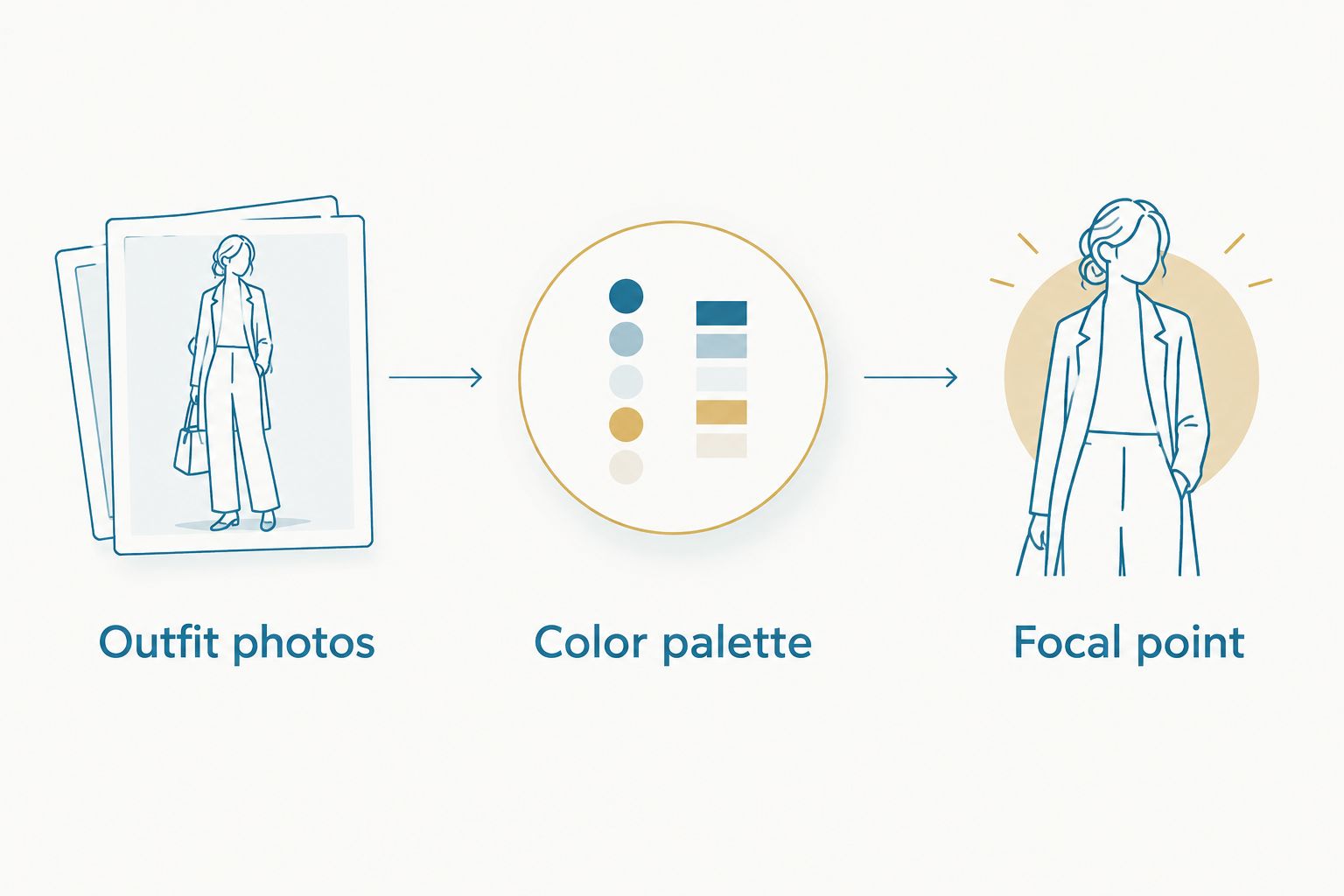
Use your phone camera or an existing photo folder before relying on shopping recommendations. Collect 3 outfit photos that represent what you wear regularly. This is a suggested comparison exercise, not a rule about how many outfits a case must match.
Look across those photographs for repeated colors and shapes. A recurring dark bag, simple metal jewelry, or a preference for unpatterned clothing gives you more useful direction than a broad search for something fashionable. You are choosing an accessory for your style, not recreating someone else’s entire look.
Reduce your references to three notes: outfit photos, color palette, and focal point. Keep them visible while browsing. A product that looks appealing alone still needs to make sense beside the things you already own.
- Gather outfit photos from ordinary days, not just special occasions.
- Identify a color palette that appears repeatedly.
- Choose a focal point for the overall look.
- Compare case images beside your references.
- Save only designs that support the same direction.
Shortlist designs by visual hierarchy
Browse manually with your brief in hand. Ask what your eye notices first: the background color, a word, a central image, or several competing details. Choose 1 focal point if you want a restrained result. This is a design recommendation, not a product specification.
Minimalism does not require an entirely blank surface. A single phrase or graphic can work when its scale, spacing, and surrounding color keep the composition clear. Conversely, a case described as simple can still feel busy if several visual elements compete.
Luxlounge aesthetic phone cases give shoppers an NYC-inspired direction to consider alongside plain-color options. The Zayren Tough iPhone Case is a product-page starting point; assess its current imagery and listed variants against your brief. The word “tough” in a name is not a substitute for checking stated construction or protection details.
- Identify the dominant element in each design.
- Compare graphic scale rather than relying on style labels.
- Check whether lettering is something you want to carry daily.
- Look for competing patterns or decorative details.
- Keep only candidates that satisfy your original brief.
Compare finish and appearance separately
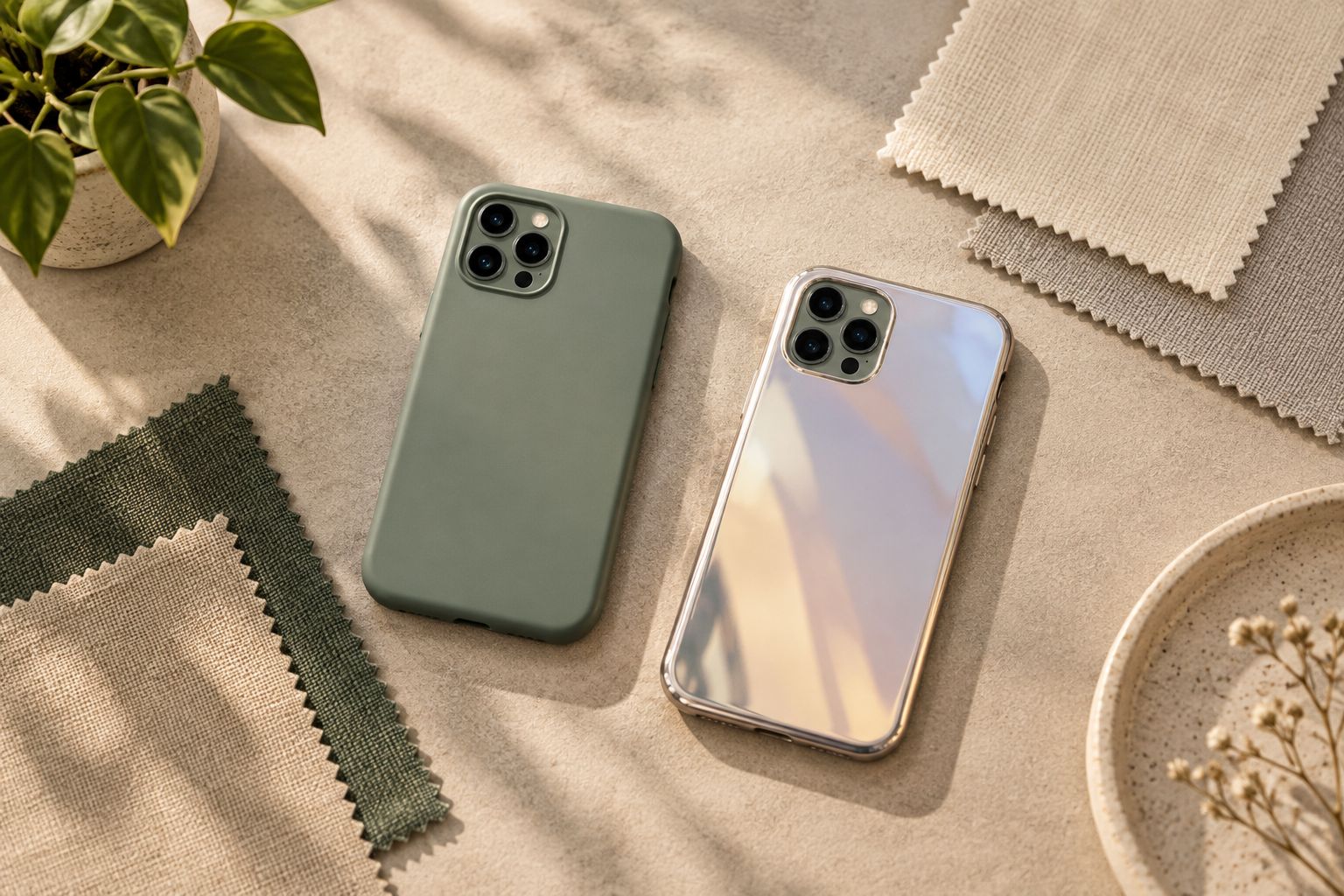
Study the listing photographs and written description together. Lighting affects how a surface appears in an image, so do not treat a bright reflection as proof of a particular finish. Use the seller’s explicit finish description when one is provided.
A matte-looking surface and a glossy-looking surface create different visual effects. Neither appearance establishes grip, scratch resistance, durability, or protection. Those are separate product questions that require separate evidence.
For minimalist styling in 2026, compare the same design under the conditions shown in the listing rather than assuming a finish will solve an unsuitable graphic. If the composition is too busy for your wardrobe, changing its surface appearance does not change the underlying design.
- Read any stated finish information.
- Examine more than the main listing image.
- Distinguish reflections from printed design elements.
- Keep appearance claims separate from protection claims.
- Ask the seller about an unclear finish before ordering.
Verify the exact phone model and selected variant
Check your phone’s model information in its settings or device documentation. Then match that information to the case listing’s available variants. Do not order based only on the brand of phone, its apparent size, or a model-family name.
The practical limitation of any aesthetic choice is fit. Similar-looking phones are not evidence of identical case compatibility. Treat the selected variant as part of the product decision, not an administrative detail to handle after choosing the artwork.
Check functional requirements separately, too. A photograph does not establish compatibility with a charging accessory, and an attractive camera opening does not verify fit for your device. If the listing does not explicitly answer a requirement, get clarification before committing to that case.
- Copy the exact model name from your device information.
- Match it to the listing’s stated compatibility.
- Recheck the selected variant before checkout.
- Verify any required charging-accessory compatibility explicitly.
- Ask about unclear compatibility rather than inferring it.
Choose a gift around the recipient’s style
Start with what the recipient already uses, not what you would choose for yourself. Their current case, bag, and everyday accessories reveal whether they prefer muted colors, lettering, illustrations, or a stronger visual statement.
For an NYC-themed gift, distinguish a connection to the city from a preference for city-themed graphics. Someone can love New York without wanting prominent lettering on a phone case. The design still needs to belong in their daily routine.
Luxlounge is a relevant starting point for NYC-inspired gift browsing, but recipient fit remains the deciding criterion. In 2026, a well-chosen phone case needs both the right visual direction and verified device compatibility. If you cannot establish the phone model, resolve that uncertainty before choosing a case.
- Confirm the recipient’s exact phone model.
- Observe the accessories they already use.
- Check whether they enjoy visible words or graphics.
- Separate their interests from their design preferences.
- Choose a style they would carry, not merely display.
Make the final decision with a side-by-side check
Open your finalists beside your wardrobe references. Compare each against 2 everyday outfits as a practical final exercise. Choose outfits that reflect different parts of your routine, rather than selecting only the combination that makes a favorite case look convincing.
Then review the factual requirements again. Design, compatibility, and any stated functional details belong in separate checks. A strong result in one category cannot compensate for a failure in another.
If several designs meet the brief, choose the one whose wording, graphics, or color you genuinely want to see repeatedly. Do not let a fashionable label make that decision for you. Your shortlist should end with a case you understand, not one whose essential details remain unclear.
- Compare finalists against your outfit references.
- Remove any case with unresolved model compatibility.
- Recheck finish and functional claims in the listing.
- Read visible wording before choosing a typographic design.
- Keep a record of the selected product and variant.
Compare minimalist phone-case design options
These options compare visual approaches, not tested product performance. The best choice is the one that meets your styling brief and has confirmed compatibility. No design category establishes a case’s materials, construction, or protection.
| Option | Best for | Styling advantage | Key limitation |
|---|---|---|---|
| Solid color | Shoppers who want the case to blend into an outfit | Makes color coordination straightforward | Offers less graphic expression; the specific shade still needs to suit your wardrobe |
| Restrained typography | Shoppers who want a personal message without several illustrations | Gives words a clear role in the design | The wording remains prominent and needs to suit daily use |
| Single graphic | Shoppers who want one visible statement | Creates a clear focal point | Graphic scale can dominate an otherwise quiet outfit |
| NYC-inspired design | Shoppers expressing a connection to city culture | Adds a personal reference beyond plain color | City references do not automatically match a minimalist brief |
Use the table to eliminate unsuitable directions before comparing individual listings. If you dislike carrying visible wording, typography is not the right category simply because its layout is sparse. If your wardrobe already contains several strong patterns, test a graphic case beside those pieces rather than judging it in isolation.
The same distinction applies to Luxlounge aesthetic phone cases: an NYC connection is a reason to look, while the individual design and verified phone fit are reasons to choose.
Common mistakes minimalist shoppers make
Treating neutral color as the whole decision
A neutral background does not cancel out dense lettering or several graphics. Look at the complete composition. If your aim is restraint, ask how many elements are competing for attention, not just whether the background is black, white, or beige.
Choosing a style label instead of a design
Terms such as minimalist or aesthetic do not tell you the scale of a graphic, the wording on a case, or its compatibility. Use labels to find candidates, then make the decision from the actual images and product information.
Assuming a product name proves protection
Words in a product title are not a test report. Read the stated construction and protection information separately from the visual description. If a feature matters to your purchase, choose on the basis of explicit information rather than an implication.
Buying an NYC reference instead of a recipient match
A city-themed case can express personal style, but it is not automatically the right gift for every New York enthusiast. Check the recipient’s preference for graphics and lettering. Their taste matters more than the theme’s relevance alone.
Leaving compatibility until checkout
A visually perfect case is not a useful choice when the needed model is not listed. Check compatibility while building your shortlist. That keeps you from becoming attached to a design before establishing whether you can use it.
FAQ
What are aesthetic phone cases?
Aesthetic phone cases are phone covers chosen for their visual style, including color, graphics, typography, and surface appearance. For minimalist shoppers, the goal is a clear design that works with their existing accessories.
What’s the best phone-case design for a minimalist wardrobe?
The best design matches your wardrobe and gives the case a clear visual role. Choose a solid color to blend in, or restrained typography or a single graphic when you want a focal point.
Can an NYC-themed phone case look minimalist?
An NYC-themed phone case can fit a minimalist look when its composition stays restrained. Assess the graphic scale, lettering, and color together rather than assuming every city-themed design has the same effect.
Is a matte phone case better than a glossy one?
Neither finish is universally better for styling. Compare the stated finish and listing images against your preferences, and do not infer protection or grip from surface appearance alone.
How do I know whether a phone case fits my phone?
Match the exact model name from your device information to the case listing’s stated compatibility and selected variant. Do not rely on a similar-looking phone or a broad model-family name.
What should I check before giving a phone case as a gift?
Confirm the recipient’s exact phone model and their preference for color, lettering, and graphics. A connection to New York helps identify a theme, but it does not replace checking their personal style.
Where should I start with Luxlounge phone cases?
Start with the individual product listing and compare its design with your styling brief. Verify the listed phone-model variant and any functional requirements before choosing it.
One last thing
Before choosing a case in 2026, imagine it beside the outfit you wear when you are not trying to make an impression. That is a useful test of whether the design belongs to your actual style rather than an aspirational shopping mood.
Choose the case that works on an ordinary day. A restrained design does not need to disappear; it needs a deliberate place among the things you already carry.